Hiran Nakhon Ngoenyang is a city name found in Northern Thai chronicles and traditions, connected with the lineage before Mangrai and the background of Lanna. It appears frequently in discussions of Chiang Saen history, but the relationship is not as simple as assigning one ancient name to every monument in the town today. A Fine Arts Department study explains why the location of Ngoenyang remains a question to be investigated rather than a conclusion to repeat without qualification. [1]
Understanding that question can change a visit. Instead of moving from one photogenic ruin to the next, you can look at what a place tells us, how that knowledge was established and which parts remain uncertain. This guide connects names and evidence with the surviving town, then suggests time to rest at Athita The Hidden Court and eat Northern Thai food without turning the historical story into a claim about the hotel's age.
The path toward World Heritage is an aspiration, not an approved UNESCO status. Chiang Saen is not inscribed and does not appear on Thailand's UNESCO Tentative List checked on 10 November 2026. Official provincial reporting concerns gathering information and coordinating efforts, not an announcement of recognition or a guaranteed future inscription. [3] [4]
What was Hiran Nakhon Ngoenyang?
The name belongs to Northern Thai accounts of settlement, rulership and ancestry. Some documents use combinations such as Ngoenyang Chiang Saen or Hiran Nakhon Chiang Saen, which explain the close association between the names. English spellings vary, including Ngoen Yang; this article uses Ngoenyang consistently. A name appearing in a chronicle, however, is not the same kind of evidence as a dated structure or an inscription that identifies a particular location. The text's period of composition and the events it describes both matter. [1]
A useful starting answer is that Ngoenyang belongs to Chiang Saen's historical background, but should not become a universal date label for everything standing in Chiang Saen. A monastery, a wall and a later repair each need their own explanation. Keeping those questions separate does not diminish the stories. It allows a visitor to appreciate them without asking one narrative to explain the entire landscape.
Were Ngoenyang and Chiang Saen the same place?
The Fine Arts Department discussion compares three traditions: the Chiang Mai chronicle, the Singhanawati tradition and the chronicle of Ngoenyang Chiang Saen. Their references to names, rivers and terrain do not all point in the same direction. Some passages suggest an area near Doi Tung and Mae Sai, with Wiang Phang Kham as a candidate; others connect Ngoenyang directly with Chiang Saen. The study does not declare the location settled. [1]
This is more useful than it may first sound. It reminds us that place names can carry political memory, lineage and later interpretation as well as geography. A compelling origin story does not automatically provide a precise map. When a travel page gives a definite foundation year or location, check whether it identifies its source as a chronicle, a later interpretation or an archaeological investigation. Use unsupported certainty as a reason to ask a question, not as evidence to pass on.
Reading chronicles without dismissing them
The historical overview on Culturio, maintained by the Princess Maha Chakri Sirindhorn Anthropology Centre, explains that several narratives associated with the Chiang Saen plain were composed later and served purposes such as legitimising rulership and connecting local beliefs with Buddhism. They are valuable evidence of how people understood their origins, but not necessarily eyewitness accounts of each event they describe. [2]
Three kinds of information can therefore be useful during a visit. Traditions illuminate memory and belief. Historical documents record names and sequences as their authors understood them. Archaeology examines material, layers and the physical relationship between surviving remains. Each answers different questions. Used together, they offer a richer understanding than either accepting every story literally or deciding that legends have no historical value at all.
If you are visiting with family, replace the task of memorising dates with a simple question: how do we know this? A display label, a documented excavation and a local story may all be interesting, but for different reasons. That approach keeps learning accessible without pretending that uncertainty has disappeared.
Mangrai and Saen Phu had different roles
Mangrai belongs to the dynastic background and the consolidation of Lanna. Saen Phu has a more specific role in the historical account of Chiang Saen: re-establishing the city on an older settlement in 1328, or Buddhist Era 1871. These roles should not be treated as interchangeable. Describing one ruler as responsible for every visible structure removes the later changes and earlier layers that make the town interesting. [2]
The reference to an older settlement matters, but so does its limit. Building on an existing place does not prove that everything visible above ground survives from that earlier town. Structures may have been rebuilt, extended or repaired. Understanding Saen Phu's place in the account gives the visitor a clearer historical reference without requiring a definitive identification of every earlier phase.
What can the city walls tell us?
The Fine Arts Department describes an earlier wall inside a later enclosing structure, with samples taken for scientific dating. This supports a picture of development over more than one period rather than a city wall built once and left unchanged. It does not, by itself, establish that a name in a chronicle must refer to the same site. The age of a sample, the construction sequence and the identification of a historical city remain related but separate questions. [1]
During a walk, begin with the interpretation provided by the site's custodians. Colour, moss and visible weathering are not reliable dating methods for a visitor. If an excavation interests you, ask which material was tested and which part of the structure the result helps explain. There is no need to climb, touch fragile brickwork or identify individual bricks yourself. A good question and a reliable explanation are more valuable than an improvised judgement.
The historical overview describes the present town with walls on three sides and the Mekong on its eastern side. [2] Looking at the town and river together helps place the ruins within a wider landscape of movement and settlement. The walls were not simply decorative objects, and they are not isolated from the town around them today.
Use museums and temples to connect the evidence
Chiang Saen National Museum and Fine Arts Department interpretation are useful starting points for understanding art forms and periods before choosing multiple sites. Look for explanations of an object's provenance, a monument's history and the distinction between original material and later conservation. Confirm current opening days, admission arrangements and access before travelling; this article does not promise a guided visit every day.
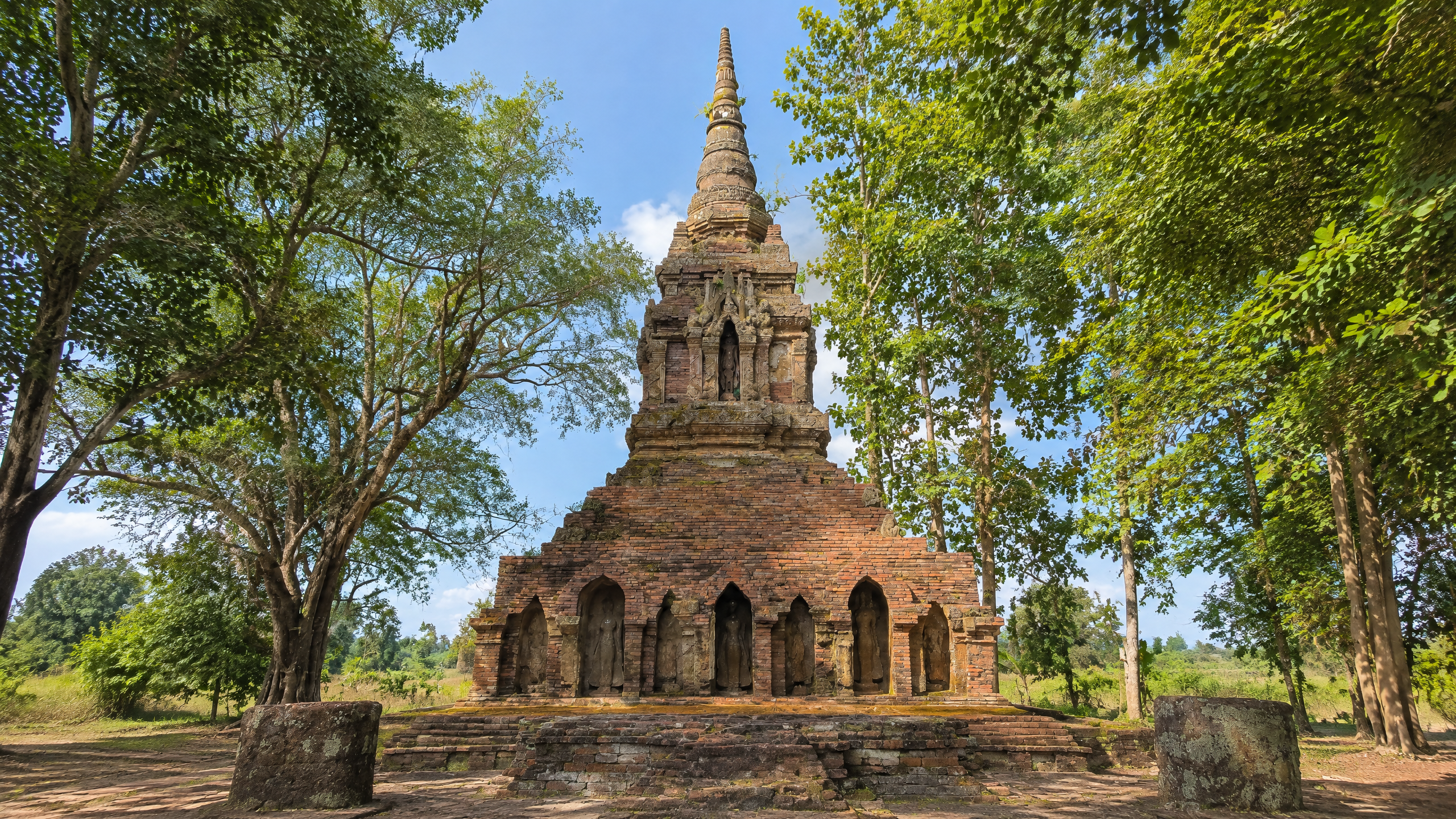
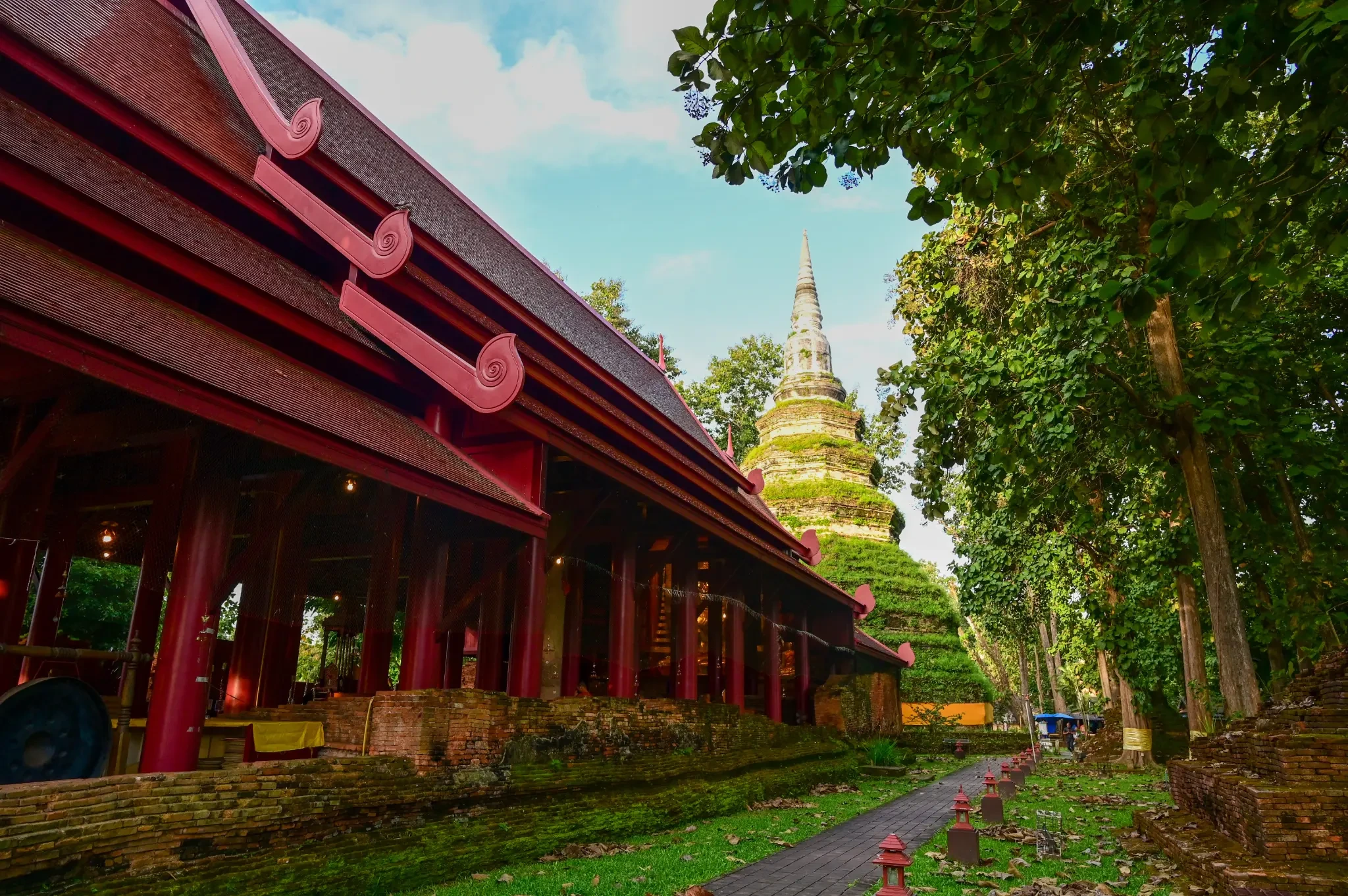
At Wat Pa Sak, the mondop form, bell-shaped upper structure and stucco details described by TAT Chiang Rai provide a specific visual starting point. [6] At Wat Athi Ton Kaew, learn the site's own story and its connection with the Athita name. Do not transfer a founding story from one temple to another. Our ancient-temple guide near Athita can help you choose places that match your interests rather than visit them all.
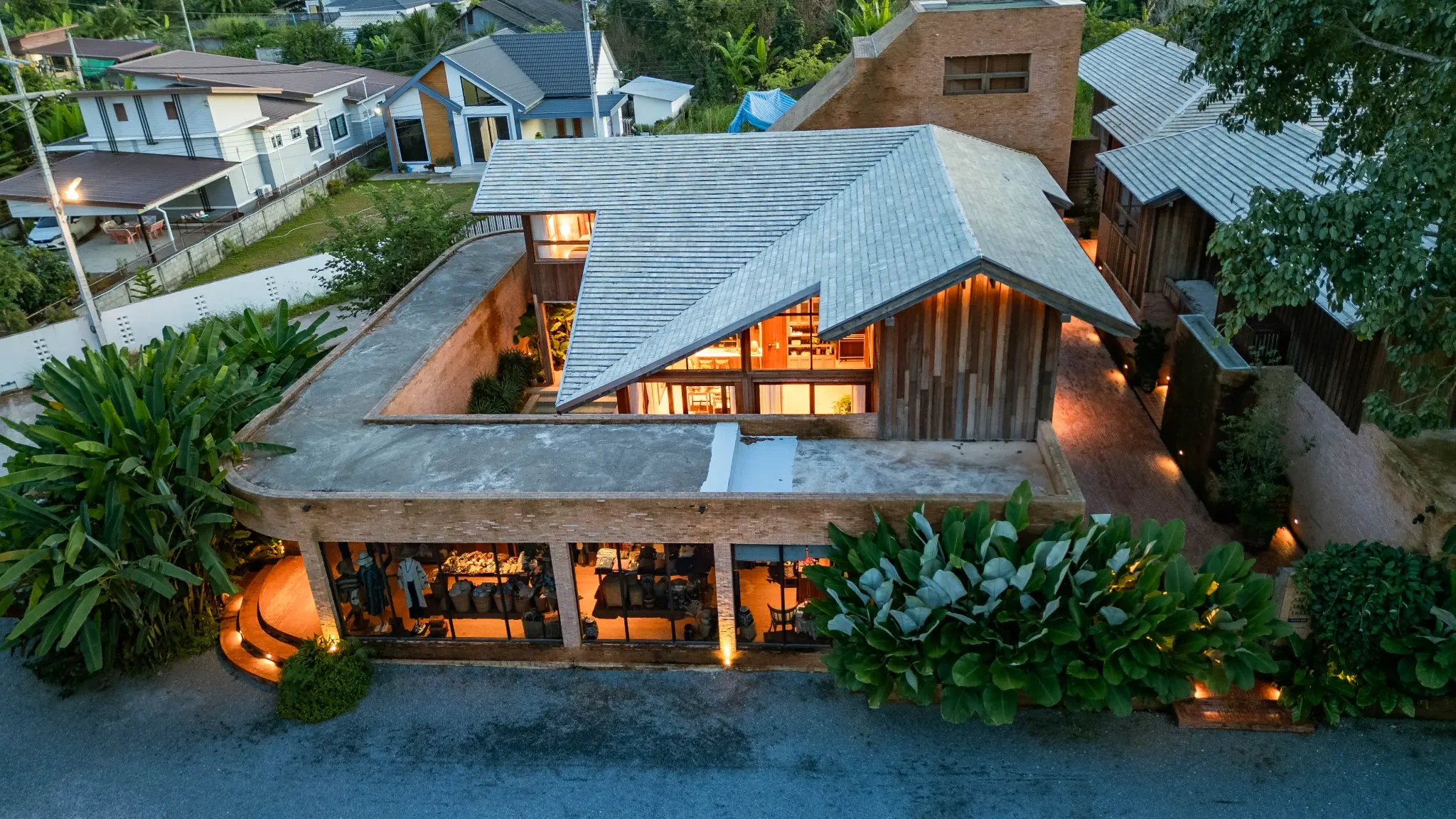
The cover uses a real photograph from Athita's existing Chiang Saen image library. It contains no added headline, invented chedi or reconstructed ancient skyline. It shows a present-day setting for a visit, not an illustration of how Ngoenyang necessarily looked in the past, and not proof of the age of every structure in the frame.
How does the history connect with World Heritage aspirations?
Chiang Saen's interest is not simply a claim to great age. It includes the study of settlement, religious art and a cultural landscape still connected with a living community. On 7 October 2026, the Chiang Rai Provincial Public Relations Office reported discussions with a Senate subcommittee to collect information and coordinate efforts to advance Ancient Chiang Saen. This is preparation and advocacy, not a UNESCO decision on a site's status or boundaries. [3]
UNESCO explains that a property must be on a State Party's Tentative List before its nomination can be examined. Further documentation, assessment and a World Heritage Committee decision follow within the nomination process. [5] Chiang Saen is not on Thailand's list checked for this article. Chiang Mai is a different property; its listing does not confer a status on Chiang Saen. Neither the town nor a hotel should be marketed as already UNESCO-recognised on that basis.
For the relationship between residents, conservation and the town today, continue with Ancient Chiang Saen as a living city on the path toward World Heritage. This article concentrates on names and evidence, so the two pieces answer different questions rather than repeat the same itinerary.
Make a historical visit thoughtful rather than crowded
A rewarding day may have only one or two principal stops. Choose places with information you can read, allow a break to reflect, and arrange a knowledgeable guide in advance if you want a deeper conversation. A museum visit followed by one carefully observed site can be more useful than a long list of photographs with no sense of chronology. Our two-day Chiang Saen guide offers a shorter planning framework that you can reduce further.
Dress respectfully at temples, follow permitted routes and ask before photographing residents. Historic-looking spaces are not automatically public spaces. If someone in your group needs regular breaks, consider the actual entrance, steps and resting places rather than distance alone. An old-town walk is still a journey through a community, not a route through a set built exclusively for visitors.
Stay at Athita and keep time for the conversation
Athita The Hidden Court, at 984 Moo 2, Wiang, Chiang Saen, Chiang Rai 57150, is an accommodation option for visitors interested in the old-town setting and brick-and-timber architecture. Returning to a comfortable base leaves room to read, discuss what you have seen and spend time with your companions. Explore Athita's rooms and villas to find accommodation that fits the way you want to travel.
The hotel's contemporary architecture should not be presented as an original Ngoenyang palace or proof of UNESCO recognition. The meaningful connection is an interest in materials, space and the surrounding town. Read the Athita and Studio Miti architecture story to understand that design on its own terms, without assigning an ancient date to a modern building.
The property has no lift. If stairs are difficult, ask the hotel to confirm a ground-floor room and the route to the room and bathroom before booking. A ground-floor request does not establish wheelchair access throughout the property. Couples and groups should share their guest numbers and room requirements so the team can suggest currently available options. For more stay planning, read visiting Chiang Saen and staying at Athita.
Northern Thai food belongs to the town's present too
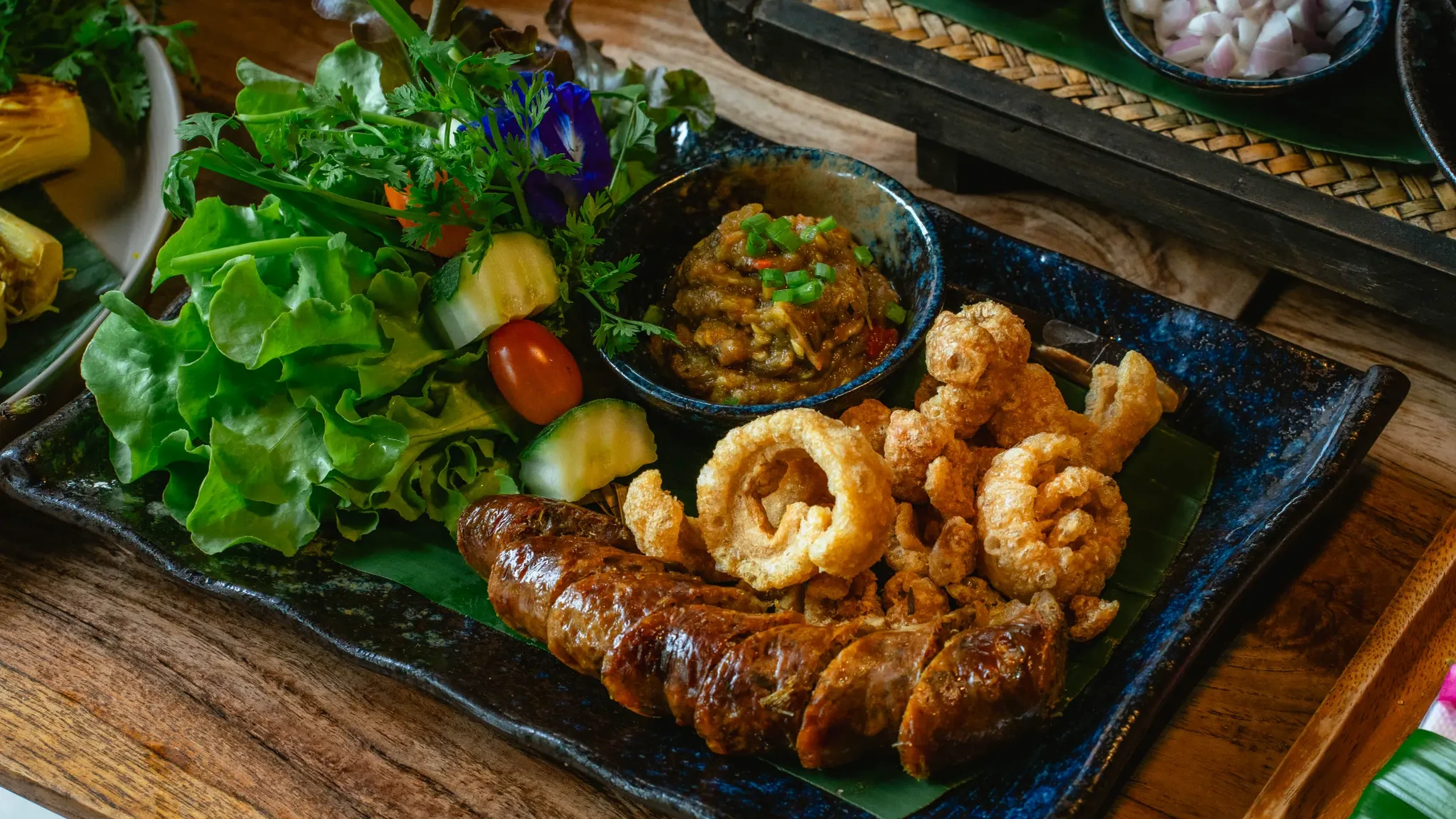
Wiang Neua restaurant within Athita provides a way to make a meal part of your old-town visit. Ask which Northern Thai dishes are available and choose a shared table that suits your group. Food can connect you with present-day culture without an unsupported claim that a dish descends directly from the Ngoenyang court. [7] Its value does not depend on inventing an ancient royal origin.
Check current menus, prices, hours and table reservations with the restaurant, and disclose allergies or dietary needs before ordering. Read what to eat in Chiang Saen at Wiang Neua or visit Athita's dining page as a starting point. A relaxed meal gives you a place to compare observations and let the day settle, rather than rush directly to another landmark.
Frequently asked questions about Ngoenyang and Chiang Saen
What was Hiran Nakhon Ngoenyang?
Hiran Nakhon Ngoenyang is a city name in Northern Thai chronicles and traditions, linked with the lineage preceding Mangrai and the background of Lanna. Its association with Chiang Saen in some texts does not resolve the city's location in every historical period.
Were Ngoenyang and Chiang Saen the same city?
Some chronicles connect them, but the Fine Arts Department discussion considers both Chiang Saen and Wiang Phang Kham near Mae Sai. The evidence used here does not establish that every reference to Ngoenyang describes the same location as present-day Chiang Saen.
How do Mangrai and Saen Phu relate to Chiang Saen?
Mangrai belongs to the dynastic background and consolidation of Lanna. Saen Phu re-established Chiang Saen on an older settlement in 1328, according to the historical overview used here. Their roles should not be treated as interchangeable.
Is Chiang Saen a UNESCO World Heritage Site?
No. Chiang Saen is not inscribed and does not appear on Thailand's UNESCO Tentative List checked on 10 November 2026. Official local reporting concerns information gathering and advocacy, not recognition or a guaranteed future inscription.
Where should I begin learning Chiang Saen's history?
Begin with Fine Arts Department information and Chiang Saen National Museum, then look at site interpretation, wall layers and chedi forms during a visit. Confirm current opening and access arrangements, and do not assume that every surviving monument belongs to the Ngoenyang period.
Where can I stay and eat while exploring Chiang Saen's history?
Athita The Hidden Court is an accommodation option in the old-town setting, with Wiang Neua restaurant within the property. Enquire directly about rooms and dining. The property has no lift, so travellers who find stairs difficult should confirm a ground-floor room and the access route before booking.
Begin with the history and leave room to rest
Ngoenyang invites questions, not a single convenient answer. Knowing which information comes from chronicles, which comes from material evidence and which remains uncertain makes Chiang Saen more interesting to explore. Its value can be experienced before any future World Heritage decision, through attention to both the surviving monuments and the people who live around them.
To plan a stay, enquire directly with Athita and share your dates, group size, ground-floor requirements and dining interests. The hotel will confirm availability, prices and conditions. The enquiry form starts a conversation; it does not automatically confirm a reservation or take a payment.
References
- Fine Arts Department, Searching for Ngoenyang Part 3, by Saiklang Jindasu
- Sirindhorn Anthropology Centre, History of Ancient Chiang Saen, by Thanongsak Lertpipatworakul
- Chiang Rai Provincial Public Relations Office, Ancient Chiang Saen World Heritage advocacy update, 7 October 2026
- UNESCO World Heritage Centre, Thailand's World Heritage and Tentative Lists
- UNESCO, World Heritage nomination process
- TAT Chiang Rai, Wat Pa Sak
- Athita, restaurant information and project dining photographs
Sources checked on 10 November 2026. This is an independently written visitor-oriented history guide, not a new archaeological conclusion. Heritage advocacy, access arrangements and hospitality services may change.
Your next step
Turn the story into time at Athita.
Explore the room collection, or tell us what kind of stay you have in mind and our team can guide you.