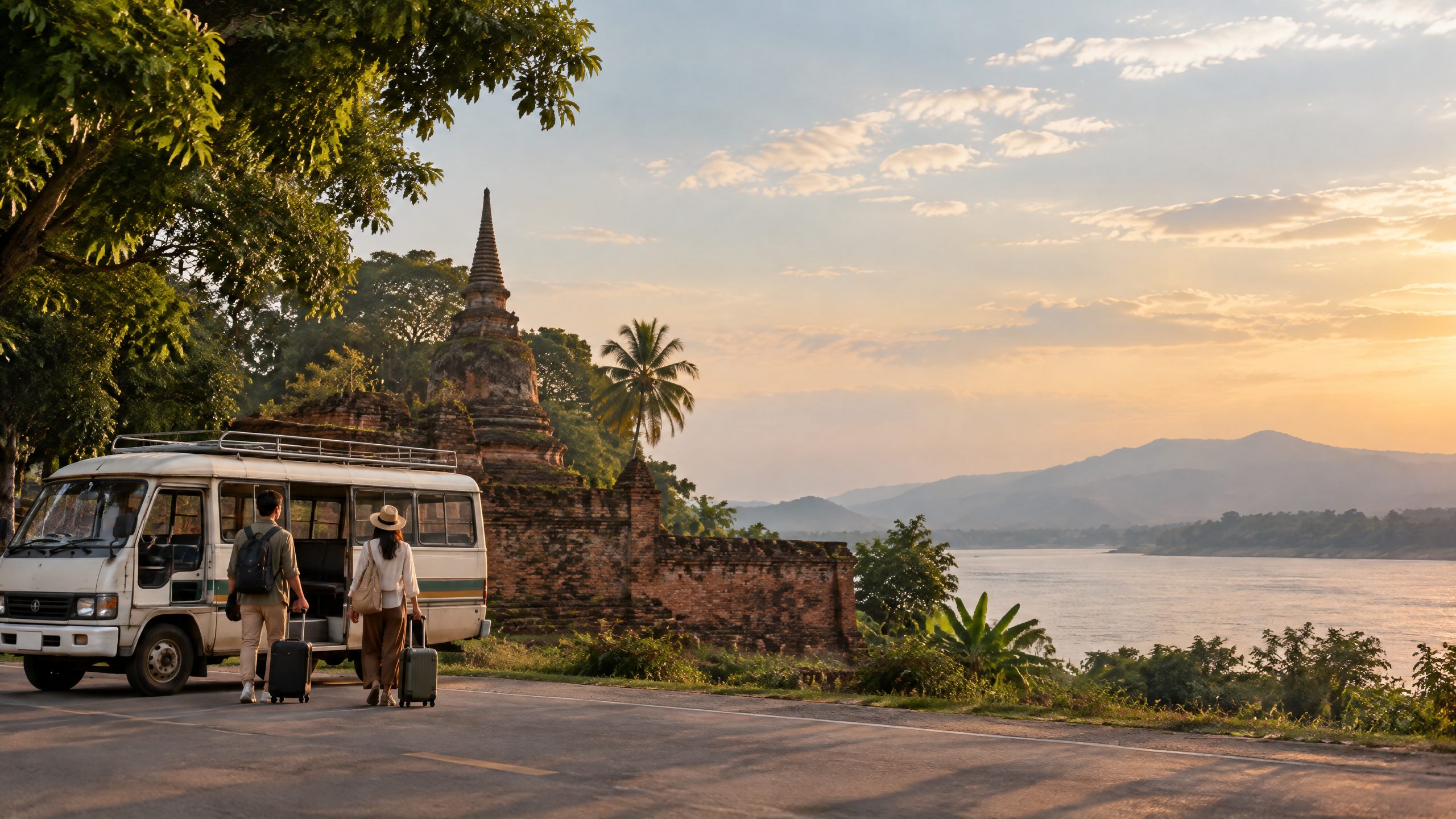
A Chiang Saen 2-day, 1-night itinerary works best when it is not treated as a race between pins on a map. This is a historic town on the Mekong in Chiang Rai Province, where old brick, temple grounds, shaded lanes and the wider borderland landscape all deserve time. A single overnight stay can give you a meaningful introduction when you pair one day in the old town with a second day that reaches toward the Golden Triangle — then leave room to rest, eat and notice what is around you.
This suggested route is designed for travellers staying at Athita The Hidden Court, a nine-room boutique hotel in Chiang Saen’s old-town setting. It is not a promise of exact opening hours, driving times, boat services or weather. Those details can change, so always check current conditions with a responsible local source or the hotel team close to your visit. The value of this plan is its rhythm: history first, landscape next, and no need to make either feel rushed.
What makes Chiang Saen suitable for a 2-day, 1-night trip?
Chiang Saen has a scale that rewards focus. It is possible to visit a few places in one day, yet the town reveals more when you give its temple remains, riverfront and quiet streets a little space. A night in town turns the journey from a roadside stop into a stay: you can arrive without hurrying, see the old town in gentler light, wake in the same landscape and decide how far to go on the second day.
The route below has two simple chapters. Day one stays close to Chiang Saen old town. Day two moves north along the Mekong-side road toward the Golden Triangle, known locally as Sop Ruak. The Tourism Authority of Thailand’s Chiang Rai Office places the Golden Triangle about 9 kilometres north of Chiang Saen old town, where the Ruak River meets the Mekong near Thailand, Laos and Myanmar [1]. That short distance does not need to become a rushed checklist; it gives you a clear geographic thread for the trip.
Two days are enough to connect Chiang Saen’s old brick, river light and borderland horizon — provided the itinerary leaves room for each one.
Before you set out
Use this as a framework rather than a fixed timetable. Arrival time, transport, heat, rain, air quality, road conditions and site-access arrangements will shape the real day. Wear footwear appropriate for uneven paths, carry sun protection and water, and dress modestly for temple and archaeological settings. If you plan any boat activity around the Golden Triangle, confirm the current provider, safety arrangements, operating conditions and border requirements directly before committing. A published fare or schedule is never a substitute for a current check.
For a fuller cultural context before you go, read Ancient Temples of Chiang Saen and a Respectful Route from Athita. It explains why choosing fewer sites and looking closely can be more meaningful than simply ticking off temple names.
Day one arrives in Chiang Saen and stays close to the old town
Settle in and let the first afternoon stay local
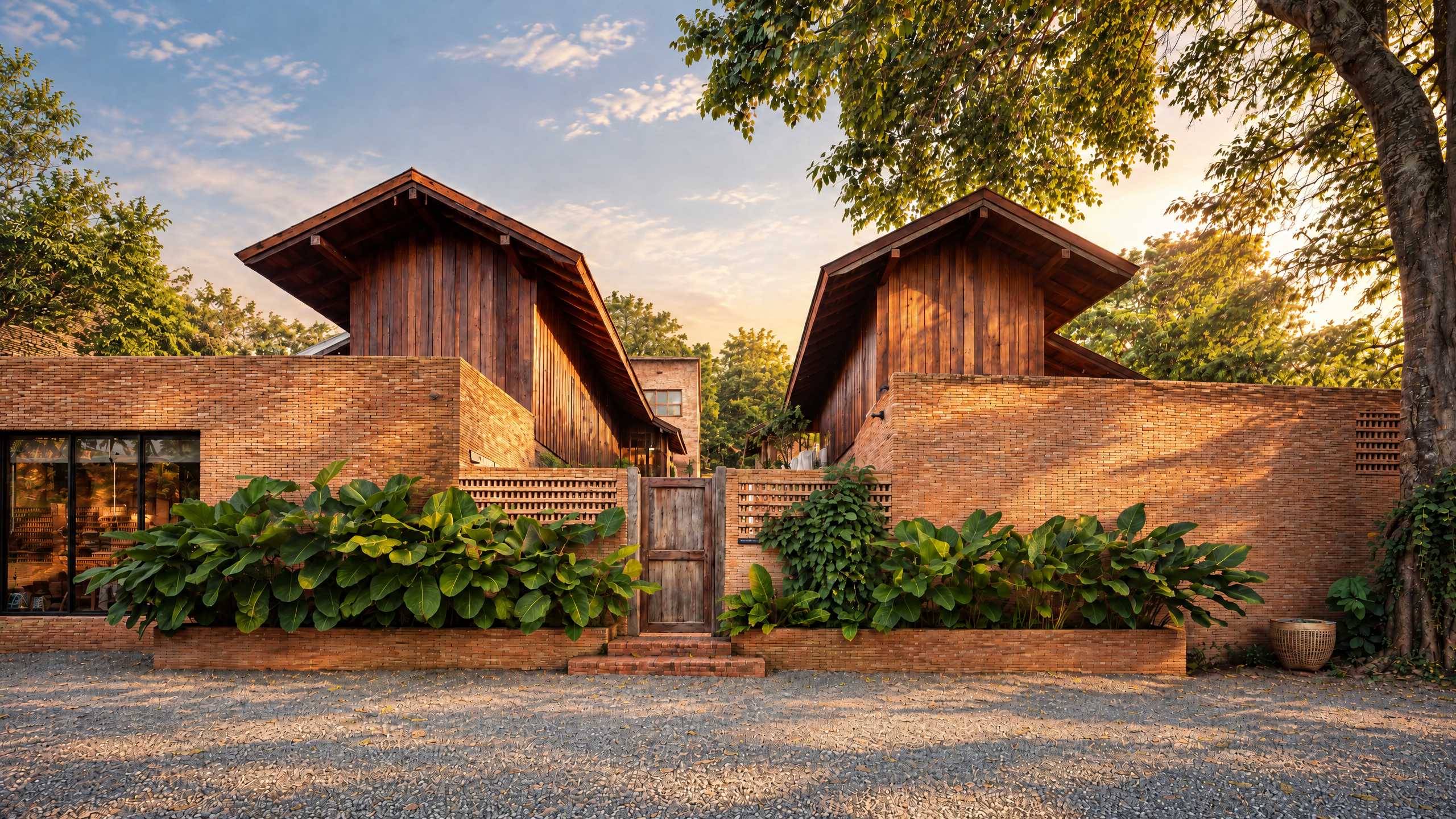
After arriving in Chiang Saen, make the first part of the day intentionally light. Check in at Athita, have a meal or a coffee, and let the old-town setting establish the pace. Athita’s brick, timber and courtyard architecture was conceived in conversation with Chiang Saen’s material language and the nearby context of Wat Athi Ton Kaew [4]. The hotel is a base in the old-town atmosphere rather than a promise of a direct Mekong-facing room, so plan the riverfront as its own outing.
When you are ready, walk or take local transport for a short orientation around the old town. Notice the transition between inhabited streets, temple grounds and older brick structures. A first visit does not need to cover every monument. It is enough to understand that Chiang Saen is a living district with an archaeological layer, not an open-air stage set.
Choose one main heritage stop and give it time
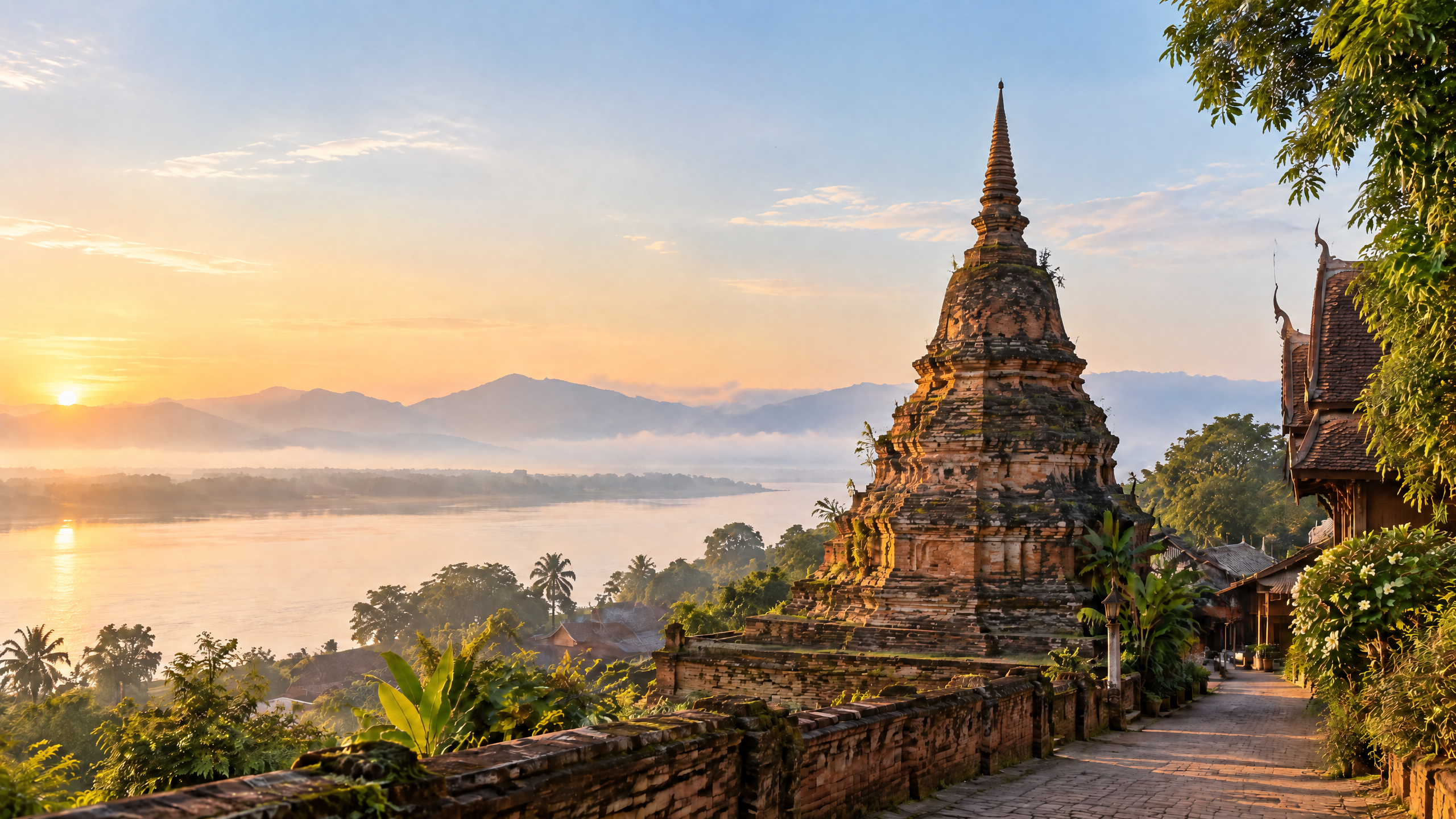
Wat Pa Sak is a thoughtful first choice for many travellers. The Tourism Authority of Thailand’s Chiang Rai Office places it in Wiang, about one kilometre from the district centre, and recounts the tradition that King Saen Phu built it in 1295 and had 300 teak trees planted around its grounds — the origin of the name Pa Sak, or teak forest [2]. Its prominent chedi has a mondop-like form, bell spire and decorative stucco. Rather than trying to translate every detail into a photograph, walk slowly, follow current on-site guidance and allow the spatial character of the place to register.
From there, you can decide whether a second nearby heritage stop feels right. Wat Chedi Luang and the archaeological context around Wat Athi Ton Kaew offer different ways to see Chiang Saen’s Lanna past. The correct choice depends on access and your own energy. Athita’s story explains its connection to Wat Athi Ton Kaew and the hidden-court idea, while our story of the Athita name and Wat Athi Ton Kaew gives more context. Please remember that heritage sites can have changing rules, restoration work or access restrictions; do not assume a static visitor experience.
Finish day one beside the Mekong
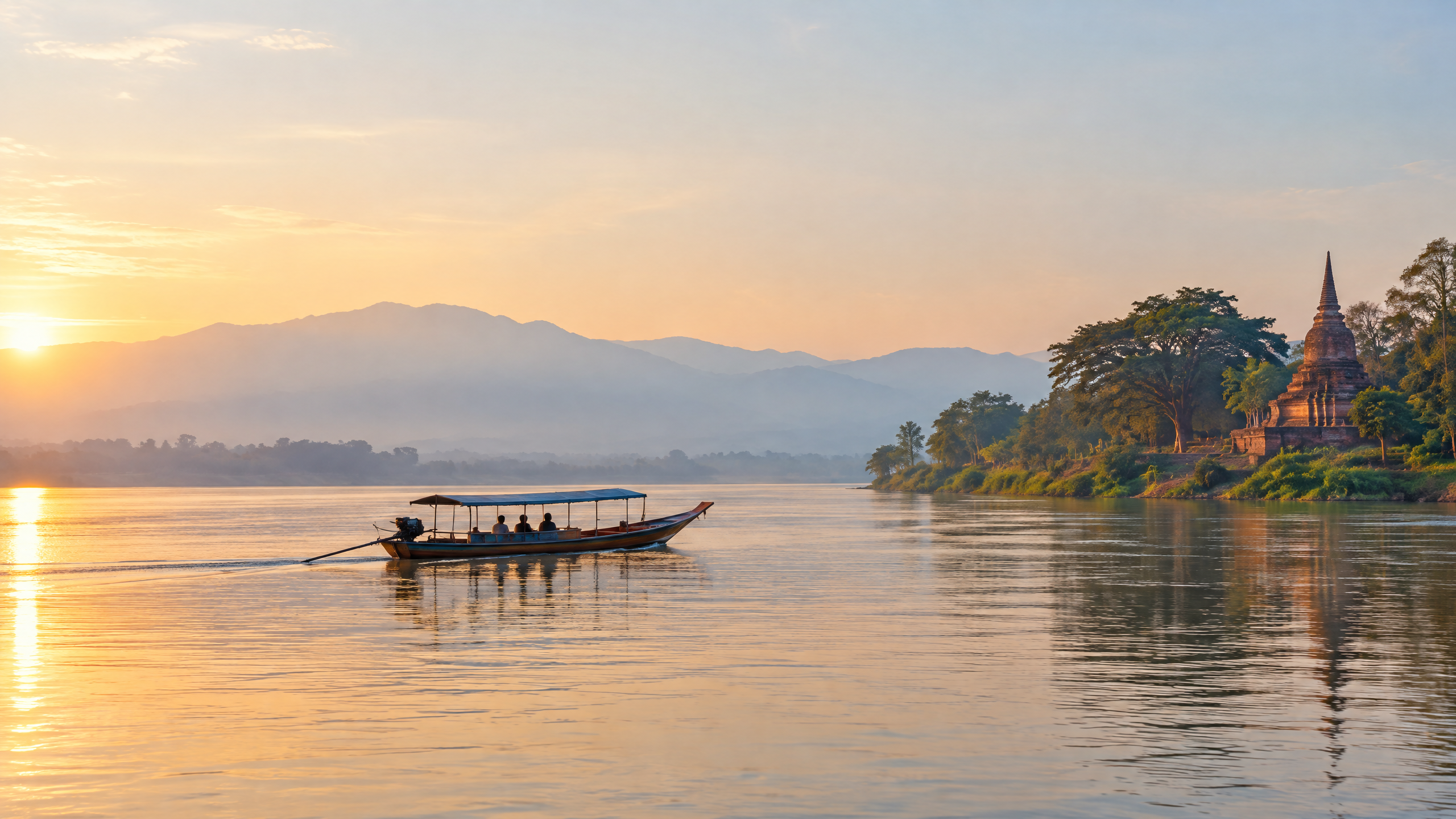
Late afternoon is a good moment to make time for Chiang Saen’s Mekong riverfront. The river is part of the town’s geography and daily rhythm, not simply a backdrop. Sit for a while, watch the light shift and keep expectations realistic: water levels, visibility and activity change with season and time of day. Afterwards, return to Athita for dinner or a quiet evening. This pause is what makes an overnight itinerary feel different from a day trip.
| Day one rhythm | Suggested focus | Why it works |
|---|---|---|
| Arrival | Check in, eat and settle | Lets the journey begin at a human pace |
| Old town | Short orientation walk | Builds a sense of Chiang Saen before visiting specific sites |
| Heritage | Choose one primary temple or monument | Leaves room to notice architecture and context |
| Late afternoon | Mekong riverfront | Connects the old town to the landscape beyond it |
| Evening | Return to Athita and rest | Preserves energy for the next day |
Day two follows the Mekong toward the Golden Triangle
Begin with a calm morning, not an early rush
On the second morning, decide what you did not have time to see on day one. You may prefer another quiet old-town walk, breakfast without an alarm, or a second heritage stop before leaving town. The point is not to add volume. It is to make the overnight stay do its work: you have another chance to notice Chiang Saen in a different light before continuing north.
Travellers interested in a seasonal approach can also read Cool-Season Chiang Saen and a Restful Stay at Athita near the Mekong or Chiang Saen in the Rainy Season. Both stories suggest adjusting expectations to present conditions rather than chasing a rigid itinerary.
Travel north to Sop Ruak and the Golden Triangle
The road from Chiang Saen old town to the Golden Triangle follows the Mekong-side direction north. The TAT Chiang Rai Office identifies the Golden Triangle as Sop Ruak, around 9 kilometres from the old town, where the Ruak River meets the Mekong near the meeting area of Thailand, Laos and Myanmar [1]. Let this geography guide the visit: the appeal is the landscape and borderland perspective, not a need to cross a border or purchase a boat outing.
Take time at an appropriate public viewpoint, observe posted rules and remain aware that this is a sensitive international-border area. If you encounter boat offerings, ask the operator about current weather, route, licensing, safety equipment, price and any documentation requirements. The itinerary does not recommend a particular operator or imply that every service will be available on the day.
Return to Chiang Saen and leave room for the road home
On the way back, resist the urge to add every landmark just because the map shows a short distance. A short return to the riverfront, one simple lunch or a final period at Athita may be more memorable than another hurried stop. If your onward journey allows it, check out only after a proper rest. If you need to depart early, use the second-day route as an idea for the next stay rather than an obligation to complete.
Where should you stay for this route?
Athita The Hidden Court is well suited to a slow itinerary because the hotel itself is part of the setting. It has nine rooms, a central court and material details in brick and timber that connect to Chiang Saen’s old-town character [4]. This does not make it a substitute for the places you visit. It gives you a place to return to between them. Explore rooms and villas at Athita according to your group size, privacy needs and preferred pace, then use the contact page to confirm current availability.
For visitors deciding whether to base themselves in Chiang Saen rather than Chiang Rai city, read Chiang Saen vs Chiang Rai and Why Stay at Athita. The distinction matters: Chiang Saen offers an old-town and Mekong setting that supports a quieter, more local rhythm.
Practical notes for a respectful Chiang Saen trip
Temple and archaeological grounds deserve the same care as active sacred spaces. Wear modest clothing, speak softly, follow posted directions, avoid climbing or touching fragile brickwork and ask permission before photographing people. Bring reusable water, take litter with you and avoid treating small communities as scenery. Current weather, haze, road conditions, access rules and opening arrangements should be checked close to departure.
For enquiries about a stay, use Athita’s contact page, email athita.info@gmail.com or call +66 63 426 9464. The team can help with stay availability, but should not be treated as a replacement for official transport, border or site-management information.
Frequently asked questions about a Chiang Saen 2-day, 1-night trip
Is one night enough to visit Chiang Saen?
One night can be enough for a focused first visit when you keep day one in the old town and use day two for the Golden Triangle or another nearby outing. It works best when you do not try to visit every temple and attraction.
How far is the Golden Triangle from Chiang Saen old town?
The Tourism Authority of Thailand’s Chiang Rai Office places the Golden Triangle about 9 kilometres north of Chiang Saen old town along the road parallel to the Mekong [1]. Travel time depends on the day’s conditions and chosen transport, so do not treat this distance as a guaranteed schedule.
What should I prioritise in Chiang Saen old town?
Choose an unhurried orientation walk, one main heritage site such as Wat Pa Sak, and time by the Mekong. If you have extra energy, add another monument after checking current access arrangements.
Can I take a boat at the Golden Triangle?
Boat services and operating conditions can change. Check direct with a currently authorised local operator for safety, weather, route, price and documentation requirements before making a plan.
Does Athita have direct Mekong views from every room?
No. Athita is in Chiang Saen’s old-town setting and close to the wider riverfront route, but it is not represented as a direct riverfront property and room outlook varies. Include the public riverfront as a separate part of your day.
A short stay with a longer aftertaste
Chiang Saen can fit into two days and one night, but its meaning comes from choosing a smaller number of experiences with more attention. Let the first day move through old brick and temple grounds, let the second day open toward Sop Ruak and the Mekong, then allow Athita to hold the quieter moments in between. That is how a compact itinerary can still feel spacious.
References and current-information notes
Your next step
Turn the story into time at Athita.
Explore the room collection, or tell us what kind of stay you have in mind and our team can guide you.