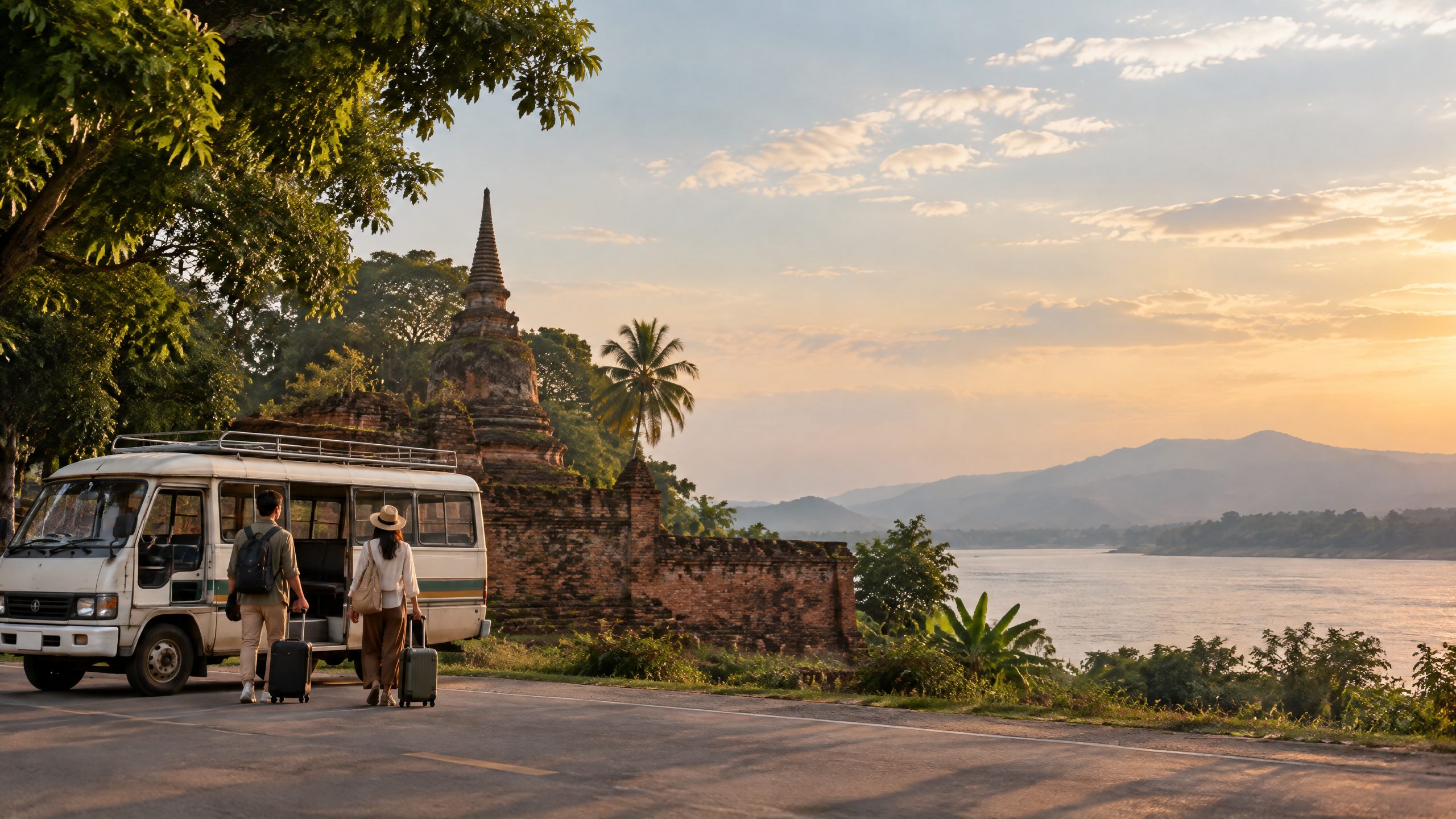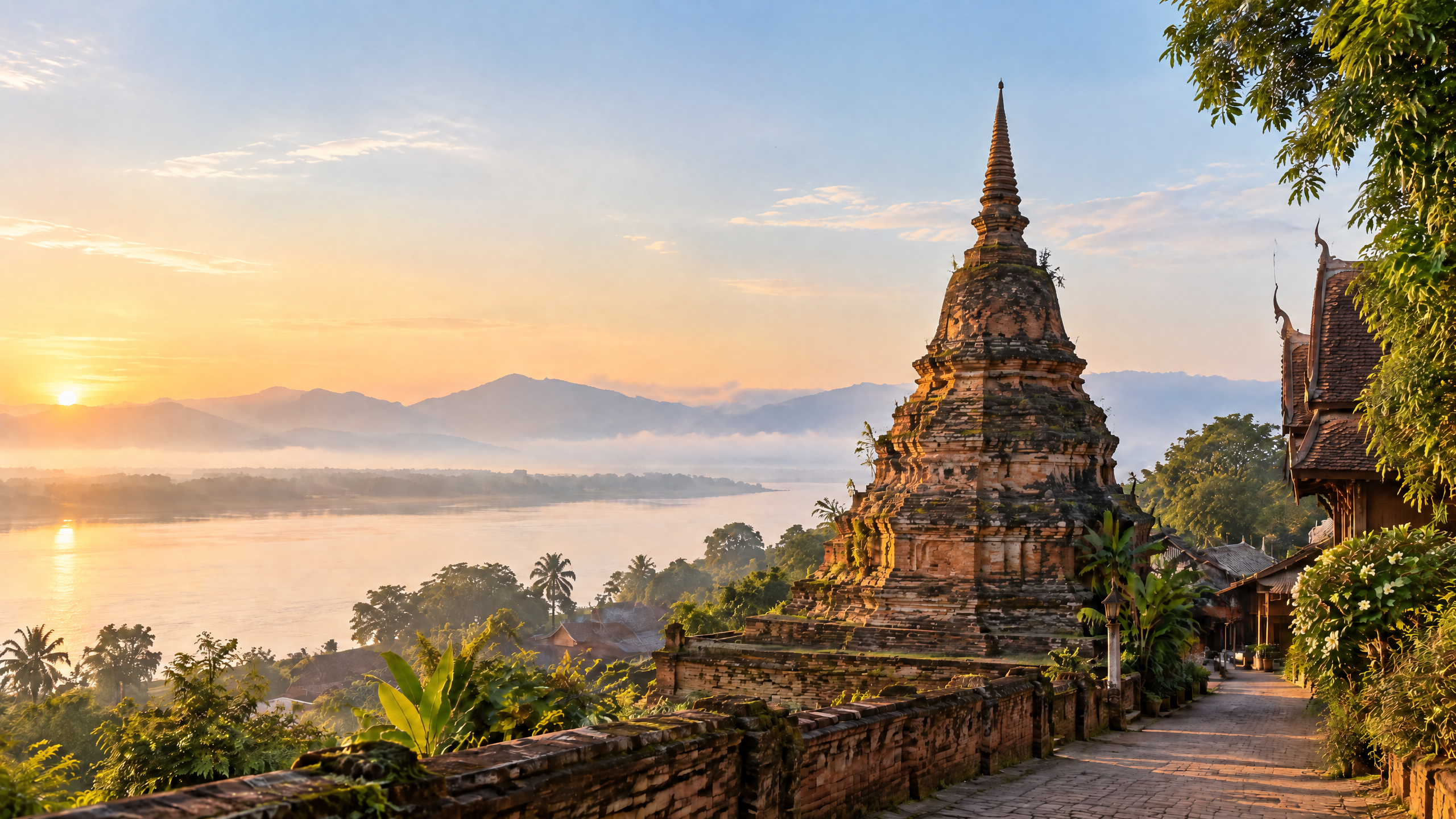
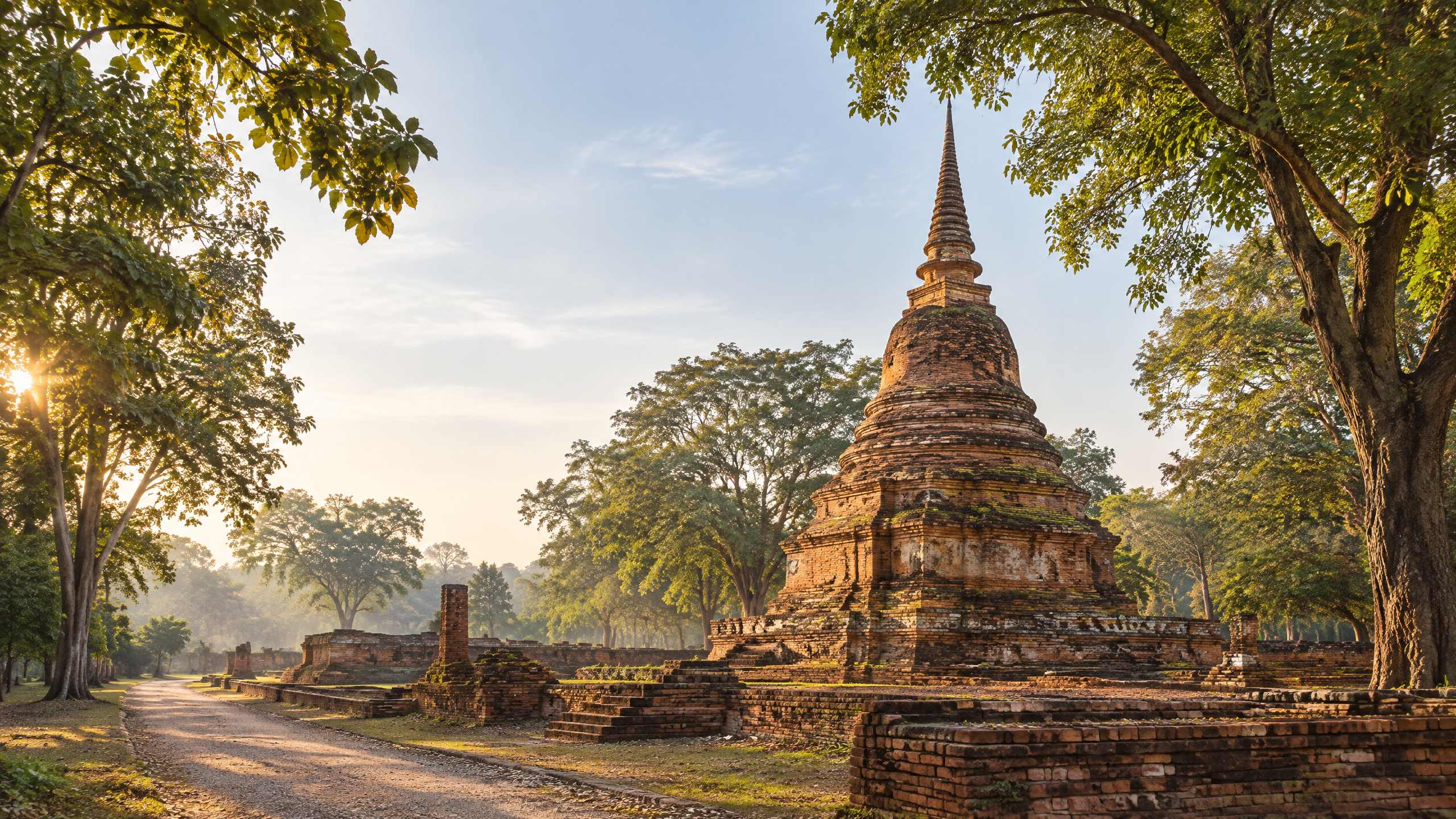
Chiang Saen’s ancient temples are best approached as a landscape rather than a checklist. Within and around the old walled town, brick bases, chedis, vihara remains and shaded paths reveal layers of Lanna history that do not fit neatly into a single date or a single story. Some places are registered archaeological monuments and former temples; others are still held with reverence. That difference matters when you visit.
This is a heritage-minded route concept for guests staying at Athita The Hidden Court in Wiang, Chiang Saen. It does not promise a fixed walking time, a guaranteed entrance arrangement or one compulsory order. Conditions, access and on-site guidance can change. Start with a current map, choose a pace that gives each site room to be seen, and ask the hotel team or the responsible local authority for practical guidance close to your visit.
In Chiang Saen, a temple route is not about collecting monuments. It is about learning to read brick, stucco, shade and silence with more care.
How should you read a Chiang Saen temple route?
It helps to keep three kinds of information distinct. First is the archaeological record: what survives on the ground, how a monument is described and when researchers broadly date it. Second is local chronicle and tradition: accounts of rulers, relics and earlier sacred structures that are valuable cultural memory but should not be treated as settled archaeological proof. Third is the living setting: current signs, caretakers and religious activity that should always guide behaviour on the day.
The Fine Arts Department notes that Chiang Saen contains many archaeological sites inside and outside its old wall, most associated with Buddhism. A short route should therefore be selective. The three stops below create a useful conversation between early-Lanna craftsmanship, the city’s monumental centre and the heritage place connected to Athita’s own name. For a broader view of the town before you set out, see Chiang Saen experiences.
Wat Pa Sak and the art of looking closely
Wat Pa Sak (วัดป่าสัก) is a registered Lanna archaeological religious site on the western side of Chiang Saen’s old town, beside the moat, city wall and Pa Sak Gate. The Sirindhorn Anthropology Centre describes the present site as an abandoned temple complex that has been excavated, conserved and landscaped. This is important context: it is a heritage place to be approached carefully, not a backdrop to rush through.
The central chedi gives the site its visual force. The archaeological record describes an early-Lanna, prasat-topped chedi of roughly 21 metres on a square base of about 14.6 metres per side. Its lower levels include niches for Buddha images and attendant figures; the upper sections include standing-Buddha niches, stucco ornament and a bell-shaped finial. The surviving vocabulary of decoration is remarkable: kala faces, deities, garuda, kinnari, naga, floral forms and scrolling patterns. Art-historical discussion in the database connects these layers with several regional traditions; it is best read as an interpretation of influences, rather than a simple label.
Its name is often explained through a regional Tourism Authority of Thailand account that says King Saen Phu planted 300 teak trees around the temple. Treat this as a historical tradition that adds meaning to the place, rather than as an exact botanical count to be verified today. The same source records a relic tradition associated with the chedi. As with other sacred accounts, it deserves attribution and respect, not a claim of modern authentication.
Look beyond the chedi too. The site includes the remains of a vihara east of the monument, an ubosot and other brick-and-mortar structures. Pause at the textures of stucco and the relationship between the chedi, the wall and the surrounding trees. That slower attention is often more memorable than trying to photograph every angle.
Wat Chedi Luang within the old walled city
Wat Chedi Luang, also known as Wat Phra That Chedi Luang (วัดเจดีย์หลวง / วัดพระธาตุเจดีย์หลวง), is a major historic temple and archaeological site inside Chiang Saen’s old city wall, beside the Chiang Saen National Museum. In the archaeological record, its main chedi is octagonal and bell-shaped, rising to approximately 35.5 metres from a base around 9.5 metres per side. The layered lotus bases and eight-sided plan give it a very different character from Wat Pa Sak’s square, shrine-bearing form.
The temple’s surviving vihara is largely ruin rather than an intact hall. The database records a substantial brick vihara in front of the chedi, with foundations, a rear Buddha-image wall and one front column remaining. Stucco fragments found at the site include Buddha figures and figures with headdresses, but the surviving pieces should not be mistaken for a complete decorative programme. Let the fragments be fragments; their incompleteness is part of what makes the site powerful.
Historical accounts around Wat Chedi Luang have several layers. Fine Arts Department material records a local tradition that Phaya Saen Phu rebuilt the temple after Chiang Saen’s city wall was completed and raised a new chedi over one associated in tradition with King Asoka. The same body of records refers to renovation under Phra Muang Kaew in B.E. 2058, or 1515 CE. Archaeological dating for the surviving chedi is broader, placing it around the fifteenth to sixteenth centuries. Rather than choosing one story as definitive, this is a good place to see how archaeology and memory can sit alongside each other.
Wat Athi Ton Kaew and the origin of Athita’s name
Wat Athi Ton Kaew (วัดอาทิต้นแก้ว) has a particular place in Athita’s story. Athita’s own first-party account says the hotel chose land facing this ancient monument, takes its name from the temple and opens toward its pagoda and Buddha image. That relationship is not a decorative theme added afterwards; it is part of how the hotel locates itself in Chiang Saen’s heritage setting.
The Sirindhorn Anthropology Centre and Thailand’s Office of Natural Resources and Environmental Policy and Planning identify Wat Athi Ton Kaew as a registered, restored archaeological monument and an abandoned temple site. The documented remains include a vihara, ubosot and brick chedi. Archaeological and heritage records associate the site with Phra Muang Kaew and with an account of a meeting intended to reconcile three monastic factions. The records give a date range of B.E. 2049 or 2058, so it is more accurate to keep the date qualified than to force it into one certain year.
For a fuller look at this relationship, read the story of Athita’s name and Wat Athi Ton Kaew. The key point for a visitor is simple: archaeological sites have their own dignity. Follow current instructions at the monument, avoid climbing or touching fragile fabric, and let the place remain more than an image.
A route with room to breathe
A satisfying temple day does not need an ambitious number of stops. Begin by choosing one principal monument and one supporting site. If you are drawn to stucco, detail and the city-wall landscape, give more time to Wat Pa Sak. If you want to understand the old walled town’s larger ceremonial scale, make Wat Chedi Luang your focus. If the connection between place, architecture and Athita is your starting point, include Wat Athi Ton Kaew as a quieter point of reflection.
| Focus | A useful first stop | What to notice |
|---|---|---|
| Early Lanna detail | Wat Pa Sak | Square chedi, image niches, rich stucco and the old-city edge. |
| Monumental old-town form | Wat Chedi Luang | Octagonal bell-shaped chedi, vihara remains and the museum-side setting. |
| Athita’s heritage context | Wat Athi Ton Kaew | The namesake relationship, restored monument and layered local history. |
For a more complete day, add a meal, a pause at the Mekong riverfront or time at your hotel rather than adding monuments just to fill the schedule. The Golden Triangle story can help if you are considering a wider northern route, while Chiang Saen versus Chiang Rai explains why an overnight stay changes the rhythm of the journey.
Before visiting an ancient temple site
Published heritage records list visitor access and no-fee guidance for these sites, but those notices are not a promise of current arrangements. Check a current map and local guidance on the day, especially if you are travelling with children, have mobility needs or plan to visit outside normal daytime hours. Respect signs, barriers and caretakers. If a space is being used for paying respects or religious activity, lower your voice and follow the direction of people responsible for the site.
Bring water, sun protection and shoes suited to uneven ground. Keep to designated paths; old brick, stucco and foundations can be fragile even when they look solid. Photograph architecture thoughtfully, but do not step into restricted areas or make assumptions about what is appropriate around people at prayer. These small choices help the route stay meaningful for everyone who comes after you.
Why stay at Athita for a heritage-led Chiang Saen visit?
Athita is a nine-room boutique hotel shaped by Chiang Saen’s brick, timber and quiet courts. It is a fitting base for travellers who want the accommodation to be part of the story: time to return after a heritage walk, to rest in a courtyard, then to decide whether the next part of the day should be a meal, the riverfront or simply stillness. Explore Athita’s rooms and private villas to choose a stay around your group and your pace.
For current availability or help shaping an unhurried visit, use the Athita contact page. The team can confirm stay details and share practical local guidance available at the time of travel. A heritage route should leave enough space for the unexpected: a changed access arrangement, a conversation with a caretaker or the discovery that one quiet chedi is enough for the day.
Frequently asked questions about Chiang Saen’s ancient temples
Which ancient temples should I prioritise in Chiang Saen?
Wat Pa Sak and Wat Chedi Luang offer two distinct views of Lanna archaeological architecture, while Wat Athi Ton Kaew adds the namesake heritage context connected to Athita. Choose fewer sites and allow time to look closely.
Are Wat Pa Sak and Wat Athi Ton Kaew active monasteries?
Heritage records describe both as archaeological monuments and abandoned temple sites. Treat them respectfully and follow current on-site instructions; do not assume a regular monastic schedule or resident community.
Can I rely on published opening hours and admission details?
No. Archaeological records provide visitor guidance, but access conditions and opening arrangements can change. Recheck with a current map, a responsible local authority or the hotel team close to your visit.
What is the connection between Athita and Wat Athi Ton Kaew?
Athita’s own story says the hotel selected land facing the monument and takes its name from Wat Athi Ton Kaew. The site is a registered archaeological monument with restored remains including a vihara, ubosot and brick chedi.
How can I plan a stay at Athita?
Send an enquiry through the contact page, email athita.info@gmail.com or call +66 63 426 9464. The team can confirm current room availability and help you plan a stay in Chiang Saen.
Sources and verification notes
- Sirindhorn Anthropology Centre, Thai Archaeology Database — Wat Pa Sak
- Sirindhorn Anthropology Centre, Thai Archaeology Database — Wat Chedi Luang
- Sirindhorn Anthropology Centre, Thai Archaeology Database — Wat Athi Ton Kaew
- Office of Natural Resources and Environmental Policy and Planning — Wat Athi Ton Kaew
- Fine Arts Department, Chiang Saen National Museum — history and archaeological context
- Tourism Authority of Thailand Chiang Rai–Phayao Office — Wat Pa Sak
- Athita The Hidden Court — Our Story
Your next step
Turn the story into time at Athita.
Explore the room collection, or tell us what kind of stay you have in mind and our team can guide you.