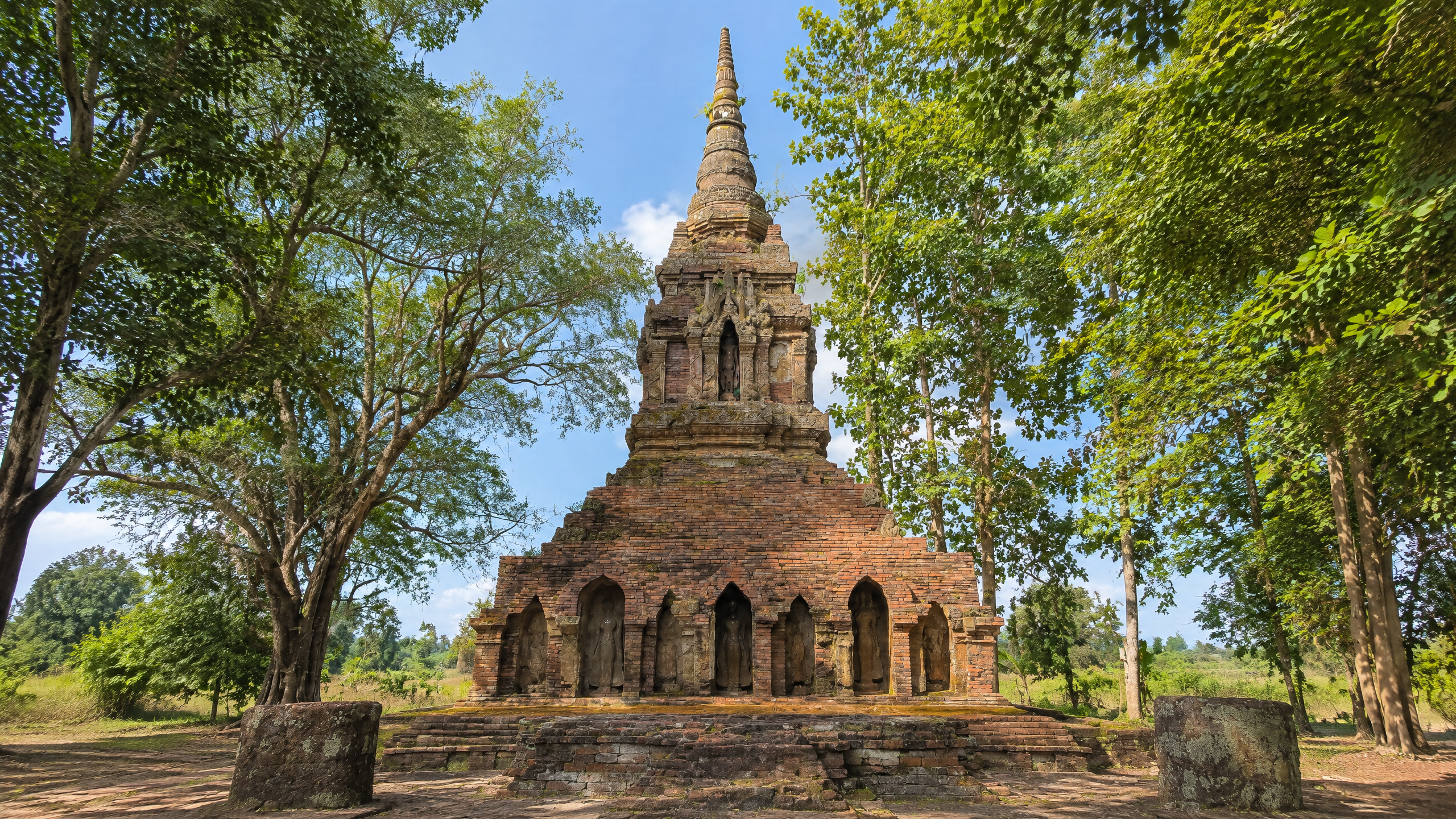
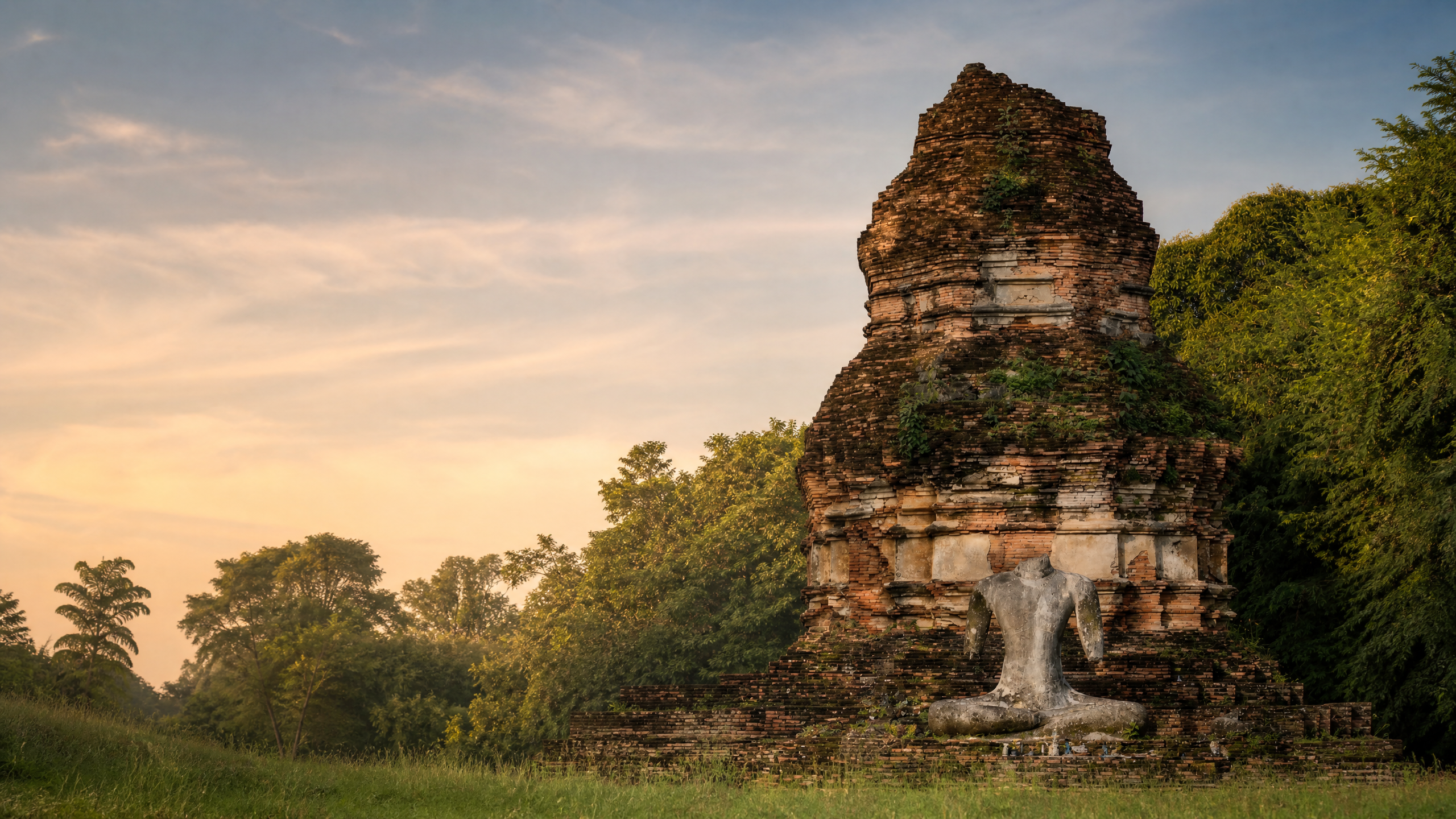
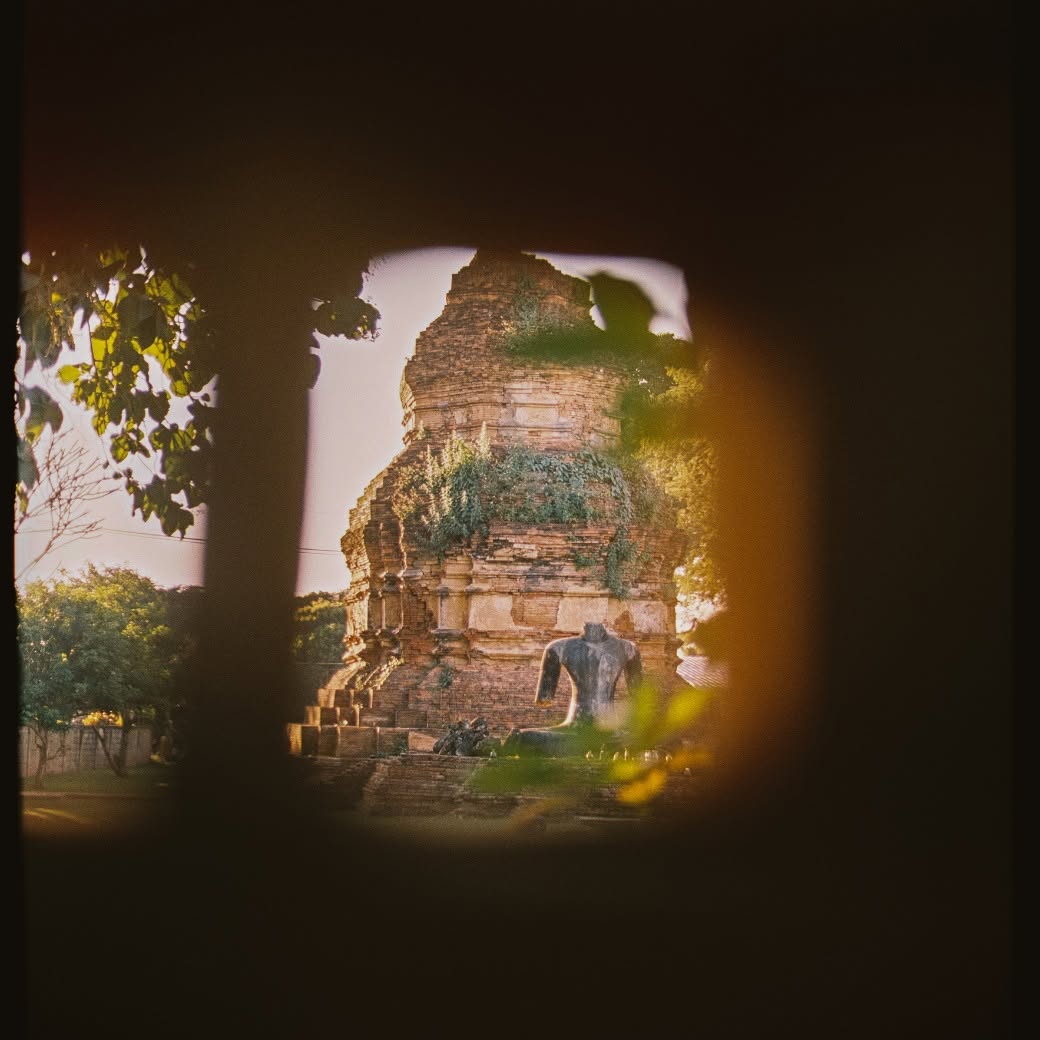
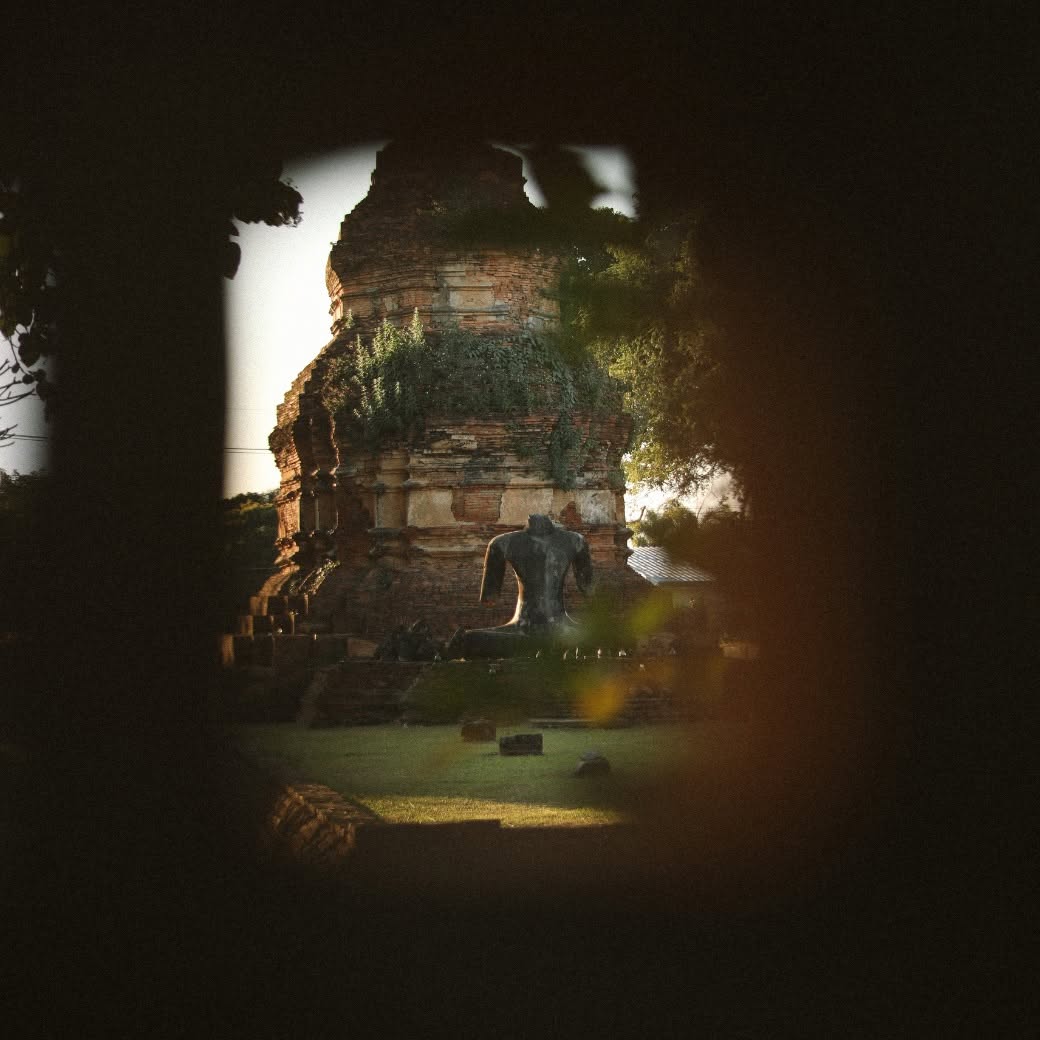
The Story Behind the Name Athita and Wat Athi Ton Kaew in Chiang Saen begins with a real place in the old town. Wat Athi Ton Kaew is a Lanna-period monument in Wiang, Chiang Saen, Chiang Rai, about 270 metres west of the Mekong. It is part of the setting that Athita The Hidden Court faces and learns from [1].
For Athita, the name is not simply a brand choice. It acknowledges that a stay is inseparable from the town around it: old brick, shade trees, local people and pathways that connect places. This story distinguishes public historical evidence from Athita’s own design narrative, so visitors can approach the place with clarity and respect.
Where does the name Athita come from?
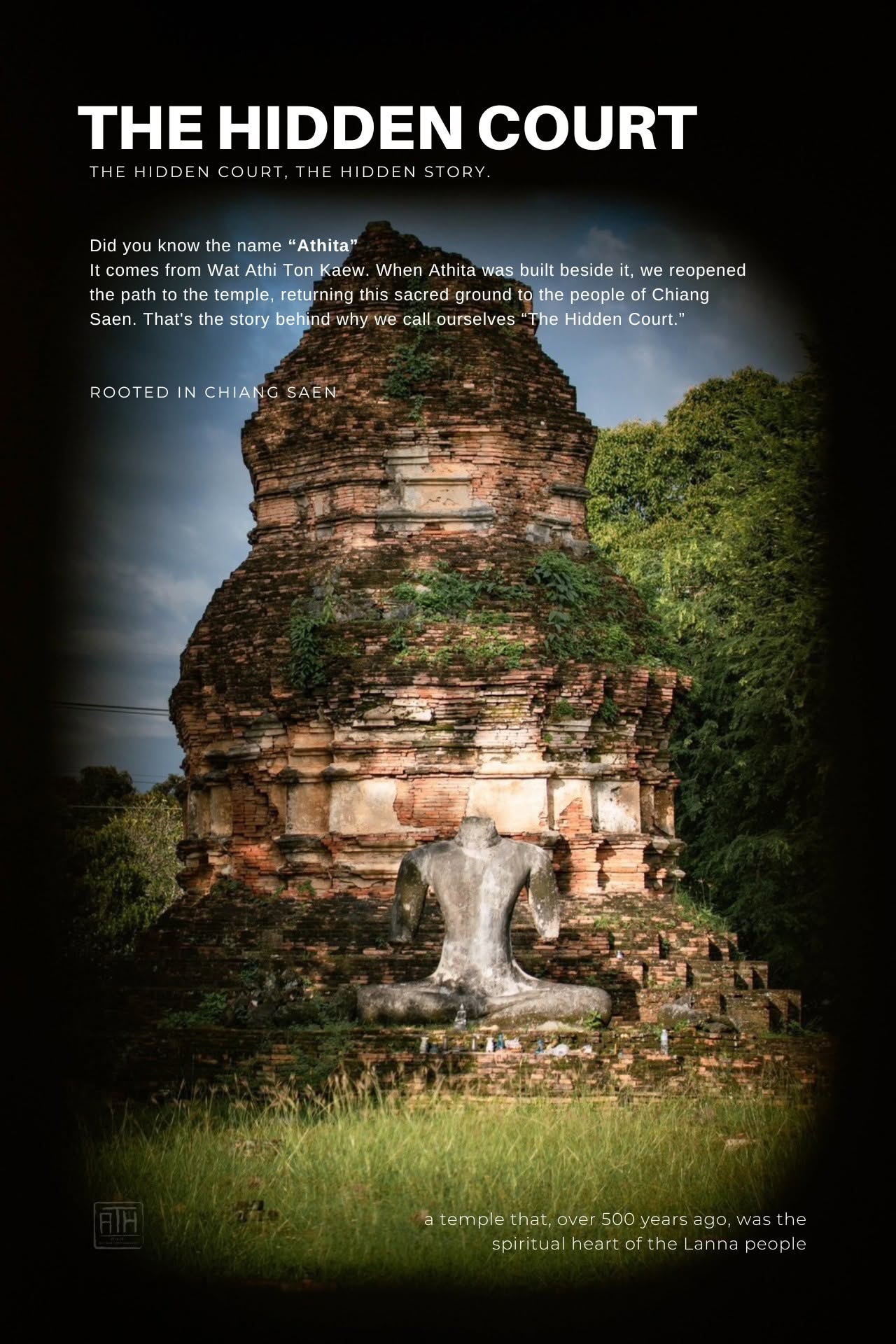
Athita takes its name from Wat Athi Ton Kaew, the ancient monument in Chiang Saen. Athita’s Our Story page explains that the hotel faces the temple and that its history formed part of the project’s point of departure [3]. The name therefore connects hospitality to place, rather than setting the hotel apart from the community.
Contemporary records use related spellings and transcriptions for the temple name. The Sirindhorn Anthropology Centre archaeological database uses Wat Athi Ton Kaew, which is the form used throughout this article [1].
Where is Wat Athi Ton Kaew?
Wat Athi Ton Kaew stands on the east side of Road 2 in Wiang Chiang Saen municipality, in the northern part of the old town. It is an abandoned temple complex that has been excavated, conserved and landscaped. Its principal remains are a viharn, ubosot and chedi [1]. This setting matters because the monument belongs to the connected landscape of lanes, homes, temples and everyday life, not an isolated attraction.
| Key detail | Information |
|---|---|
| Location | Wiang, Chiang Saen, Chiang Rai |
| Archaeological coordinates | 20.280325 N, 100.085771 E |
| Period | Lanna, around the 21st Buddhist century |
| Principal remains | Viharn, ubosot and brick chedi |
| Stewardship | Fine Arts Department, Wiang Chiang Saen municipality and Chiang Saen district |
Visitors should use publicly accessible areas, dress respectfully and avoid climbing on or touching fragile parts of the monument. A stay nearby is an opportunity to move slowly through the old town, not a reason to treat a sacred heritage site as a backdrop.
Is the temple really more than 500 years old?
Yes. The archaeological database records its historic date as 2049 or 2058 BE, placing it more than five centuries before the present [1]. Because the records cite slightly different dates, describing the monument as around or more than 500 years old is more precise than claiming one definitive construction day.
The surviving chedi makes its layers of history visible. It is a brick monument with two structures built one around the other. The outer layer is a Lanna bell form, while the inner chedi has a lotus-bud form that researchers connect to earlier Sukhothai influence [1]. Heritage is therefore not fixed in one moment; it is shaped by care, change and continuation over time.
Phra Mueang Kaew and a place of reconciliation
The Sirindhorn Anthropology Centre and the Office of Natural Resources and Environmental Policy and Planning record that Wat Athi Ton Kaew is associated with Phra Mueang Kaew, ruler of Chiang Mai, who visited Chiang Saen. In 2058 BE, the temple was a place where monks from three groups assembled to reduce conflict and enable shared religious ceremonies [1] [2].
The Yonok Chronicle passage cited by the archaeological database records 1,010 new ordinations. The number matters not as spectacle, but as evidence of an intention to make religious space shared again.
This history asks for care in the way the temple is visited and photographed. It is more than a beautiful ruin. It is linked to faith, monastic reconciliation and the long civic history of Chiang Saen.
From the temple to The Hidden Court
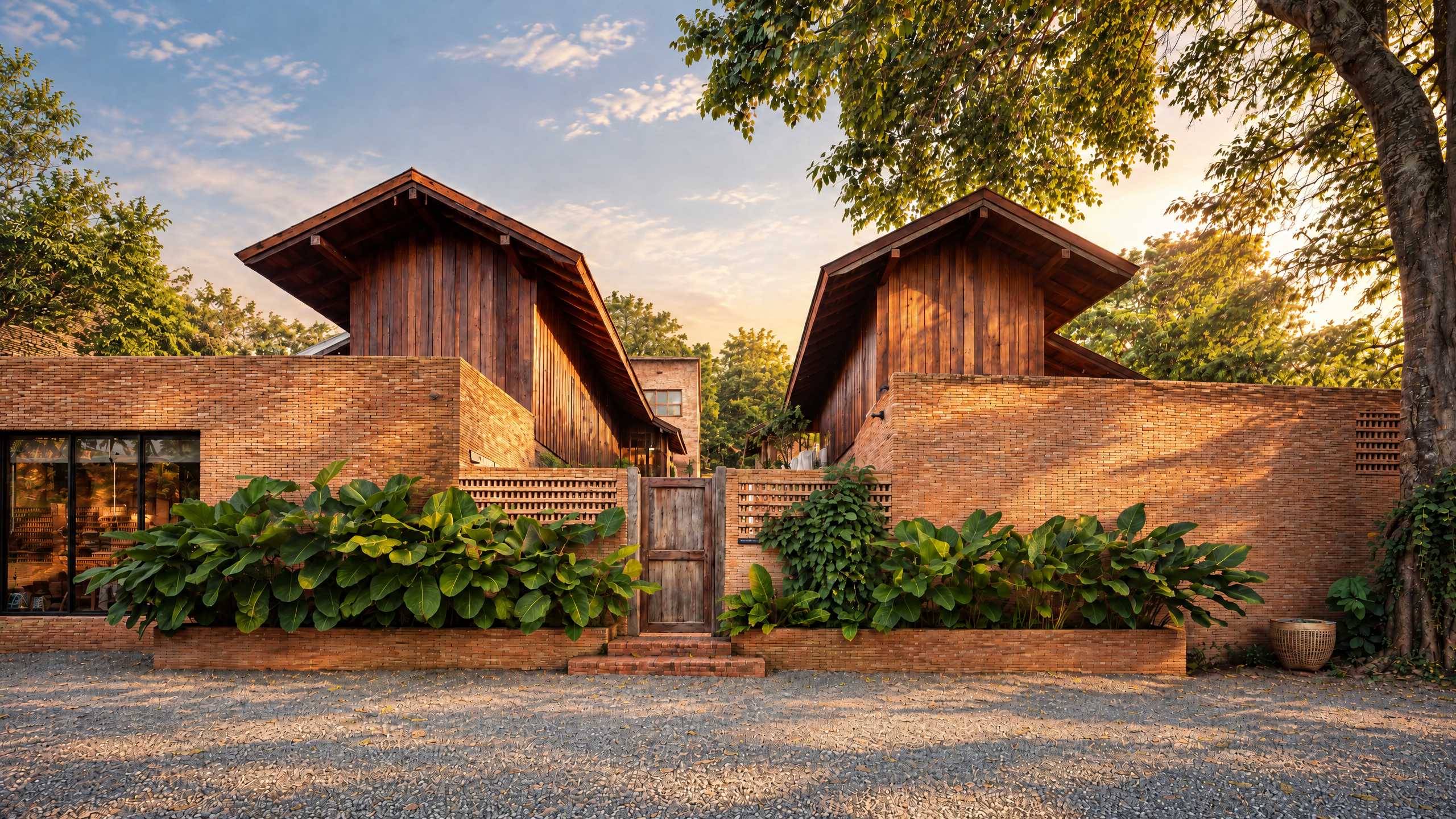
The temple explains the root of the name Athita, while The Hidden Court describes the relationship with the land. Athita tells of a local understanding of khuang, a Lanna word for the shared open space of a home or temple. The idea of a court hidden in the land informed the site plan [3]. An L-shaped building embraces a central lawn court and keeps its height below the Buddha image in respect for the setting.
This is Athita’s own design story, not a claim that the hotel is part of the ancient monument. That distinction allows a more respectful relationship with heritage: the hotel is near the old town, listens to its material language and helps guests encounter its temple lanes quietly.
Brick, timber and the path back to the temple
In Chiang Saen, monuments often speak in brick while homes speak in timber. Athita’s story describes handmade clay brick at the walls and ground floor, with teak and Lanna craft upstairs [3]. The intention is not to copy the past, but to work in a language that belongs to the place.
Athita describes its lobby, café and restaurant as spaces welcoming both guests and visitors, creating a gentle pause before a walk to the temple [3]. Continue with Living Architecture at Athita or discover Chiang Saen experiences for further context.
Plan a respectful visit
Staying near an old temple does not require a packed itinerary. Start with an unhurried morning, take a short route between brick walls and trees, then return to Athita’s court as the day changes. For a softer, wetter season, read Chiang Saen in the Rainy Season.
Begin by exploring accommodation and pool villas, then use the Athita contact page for route or stay planning. More than one night leaves room to experience the temple, old town and Mekong at their actual pace.
Frequently asked questions
Does the name Athita come from Wat Athi Ton Kaew?
Yes. Athita’s Our Story page states that the name comes from Wat Athi Ton Kaew, the ancient monument near the hotel setting [3].
Why is Wat Athi Ton Kaew important?
It is a Lanna-period monument with a viharn, ubosot and brick chedi. Records also describe its role as a gathering place for three monastic groups in 2058 BE [1] [2].
How old is Wat Athi Ton Kaew?
The archaeological database gives dates of 2049 or 2058 BE, making it more than 500 years old today [1].
Why does Athita use The Hidden Court?
According to Athita’s design story, the idea comes from khuang, the shared open space of home and temple in a Lanna understanding, and the court concealed in the land [3].
A name that invites a deeper Chiang Saen
The name Athita is a small doorway into a much larger story: Wat Athi Ton Kaew, historic reconciliation and a town that continues to live around its monuments. A meaningful stay is not only about being near something old. It is about slowing down enough to hear what the view in front of us has to say.
References
Your next step
Turn the story into time at Athita.
Explore the room collection, or tell us what kind of stay you have in mind and our team can guide you.